Will Bitcoin Flip Gresham's Law?
Natalie Brunell said that bitcoin is “starting to flip Gresham’s Law on its head.”
In a world where merchants want the good money, we slowly move towards a world [in which] the strongest money is what merchants demand to be paid in.1
Why won’t Gresham’s Law happen instead? Does good money always win in the wild? One of John Maynard Keynes’ beliefs is apt here. His upshots might have been inimical to hard money, but he had a good point about the boom-bust cycle.
Gresham's Law
Gresham’s Law means that bad money chases out good money. This is a threat to bitcoin (BTC). Bitcoin is not supposed to be chased out. It’s the money people are supposed to take up because it’s so good.
Why would bad money chase out good money? Here’s a (made-up) example to illustrate.
The Cleaner-Paid-in-Silver Example
Imagine that I pay a lady to clean my kitchen. Juanita is an illegal immigrant, and I exploit her, and pay her a grand total of 50 cents. One day, I’m not there, and my pretty but stupid girlfriend, in order to pay the cleaner, rummages through a drawer, wherein she finds a silver coin. It states ‘50c’. Here’s a picture to illustrate it:
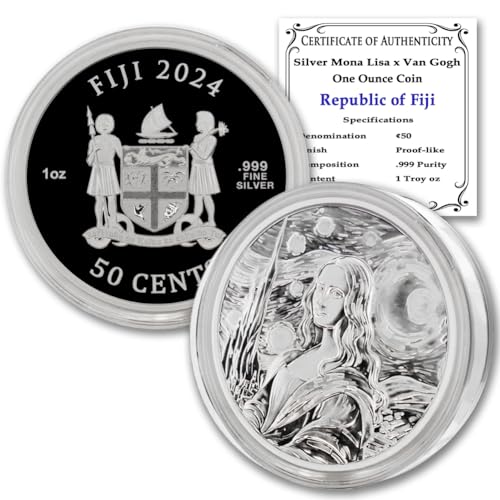
“Perfect,” says my 70-IQ girlfriend and hands it over unthinkingly.
There— I got my comeuppance! That 1oz silver 50 cent coin is worth about 150x as much. I bet that Juanita would not be so stupid. How many of you know someone who would spend a silver coin when nickel-alloy ones are handy?
How a flipped-over Gresham’s Law might work
Some economists2 have noted that Gresham’s Law works in reverse when you let money evolve naturally. It’s to do with inflation. If merchants demand good money, then they would also get rid of the bad money they recieve as soon as possible. They would offload it as change or trade it with a money exchanger. All of this is highly inflationary for the bad money. That leads to a downward spiral.
It sounds plausible. So is Ms. Brunell right?
Stop! Important assumption!
Gresham’s Law makes an assumption, I think. It seems that people put aside the good money mainly because it holds its purchasing power. That’s not the only criterion for being ‘good’ money. There’s also:
- medium of exchange
- unit of account
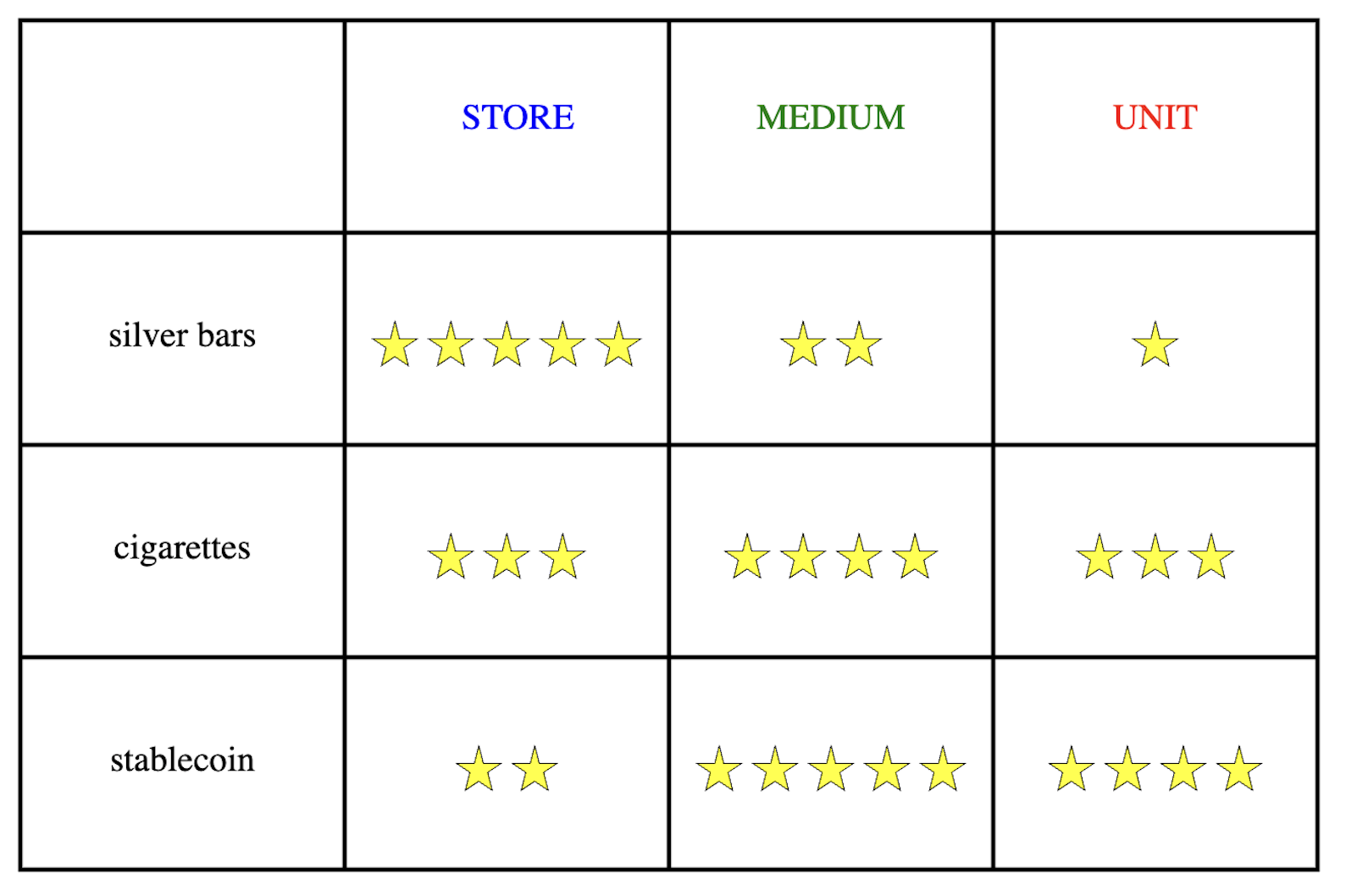
Comparing a good value-store with a good medium and a good unit
Stablecoin
Nobody would put aside the stablecoin. It only gets 2 stars for ‘store of value’ because stablecoin are tied to the ever-devaluing US dollar.3 I can’t think of anyone who would put aside a form of money because it was the best unit of account.4
Cigarettes
Some might put aside cigarettes. They’re a very good medium of exchange, worth 4 out of 5 stars. Being so regular, they’re a good unit of account, but don’t scale up well for very dear items. They are okay for value-storage, but break too easily.5
Silver bars
I would choose to put aside silver bars and I think most folk would. Being a mediocre medium of exchange actually helps Gresham’s Law. It makes sense. Hoard the money which is hard to use, but easy to profit on.
A nod to Keynes
John Maynard Keynes was all about stimulating the economy. He thought that there was a natural boom-bust cycle, arguing that, in effect, one needs to print money, when the bust comes around.6
I don’t agree with Keynesian policies. He was right about something fundamental all the same.
- There is a save-vs-spend cycle;
- This is ultimately based on the growth-vs-conservation instinct in all living things;
- An economic system should counterbalance each instinct.
I mean that, if you build a car with only an accelerator (gas) pedal, you’re screwed, and if you build a car with only a break-pedal, you’re screwed.
Keynesian counter-cyclical intervention is overkill. I champion baking in a fair balance between pro-saver and pro-spender. That’s why I liken it to building a car.
Balsa-wood man argument
Bitcoin Maxis like Natalie Brunell make a balsa-wood-man argument (not quite straw). They say that merchants will chase away all the bad money leaving bitcoin (BTC). It’s a free market, right? Why won’t people come up with other forms of good money? They already exist. Some choose monero (XMR) because of its easy-to-use privacy. Some choose gold. Gold is the best store of value.
“But BTC is far more usable than gold or XMR due to bla bla bla…”
Usable in theory
Fine, then. Use it.
There’s usable in practice and usable in theory. Usable in theory doesn’t get you very far. Without actual daily use, bugs aren’t found; upgrades are slow and often misguided; people are easily distracted by alternatives.
Usable in practice means people really do use it. I have my doubts whether Natalie Brunell’s usage goes beyond sending her D.C.A.7 BTC to her hardware wallet.
If you’re a big fan of bitcoin and you’re not using it to buy things, you’re acting against it.
The hoarding instinct
The hoarding instinct is very strong. It goes into overdrive in the bust times. Credit jams like an ungreased wheel on a muddy road.
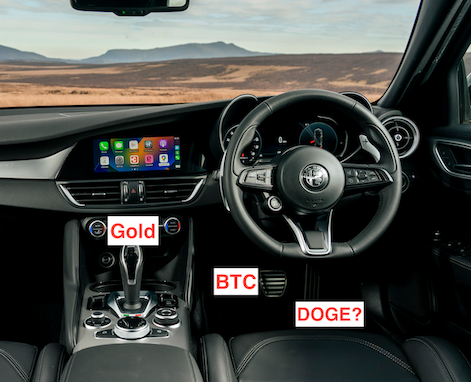
Bitcoin is too good a store of value. It needs to be, because, without a ‘number go up’ trajectory, the regressive issuance schedule weakens the system. That’s a really big topic. Suffice to say that on a Bitcoin Standard, the recessions would be depressions. Bitcoin needs gold to assuage the hoarding instinct, and something like dogecoin (DOGE) to grease the wheels on muddy roads. I don’t like DOGE myself— I know I’ll regret writing this in a week— but its loose monetary policy might be just the ticket.8
Conclusion
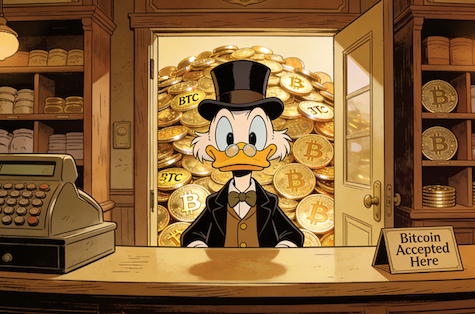
Reverse Gresham’s Law is indeed plausible. Gresham’s Law bespeaks a deeper law of economics, all the same, and would coexist. Merchants demanding bitcoin would become Scrooges. We already see far too much ‘usage in theory’.
- Coin Stories podcast, episode 443, November 17th, 2025. e.g. here. (Return)
- e.g. Robert Mundell (Return)
- Actually, a stablecoin may be tied to any commodity. Edelcoin (EDLC) is tied to copper, nickel, and caesium. It would overcomplicate the argument however. (Return)
- Stablecoin are excellent units of account because, first, they are divided and added by computers, and second, people price things in USD already. They lose a star because of the prices always going up due to inflation. (Return)
- I wouldn’t be against bumping the ‘store of value’ rating down to 2, since smoking waxes and wanes with fashion. At time of writing, it’s waxing with the youth. It’s worth noting that smoking tobacco has been popular since the 17th century. (Return)
- Keynes’ mechanism was mainly governmental spending. Since fiat money is created ex nihilo by banks, in the form of loans, so long as the extra governmental spending comes from debt, it is ‘printing money’, to put it colloquially. (Return)
- = ‘dollar cost average’. It means buying something regularly, e.g. once per week, regardless of price. (Return)
- I much prefer litecoin (LTC), but, at 84 million fixed supply, it might be still too tight. DOGE has infinite supply. (Return)