Crypto For Lefties, Part Two: Top 3 Cryptos
Cryptocurrency is a tool and an ethos. The ethos has as its polestar the right of the individual to send money to whomever he or she wants. I outlined the ethos here. The ethos is broad enough to allow tweaking. Lefties often feel like crypto is just for Libertarians, but many nerds are Lefties, and have tweaked both the tech and the ethos. It’s just like in music; the way whereby Grunge tweaked Rock to get rid of the leather pants and lecherous fantasies.
Let's separate the Pearl Jams from the Def Leppards.
My criteria for picking progressive cryptos
In other words, if you’re progressive-leaning, you should use a progressive-leaning cryptocurrency. “How? We’re talking about money, not ideology.”
Good question. My approach was more precise than you would think. It’s to do with the nuts and bolts of the cryptocurrencies. I put specific criteria to work in my search...
- No ASICS
Certain cryptos use highly specialized computers for mining called ASICs.1 The problem is that, because they have no use beyond crypto, these ASICs get dumped into landfills after merely a few years. - No Suit-and-Tie Managers
Crypto is supposedly by and for the people, but some cryptocurrencies sneak in a management team which would fit right in at J P Morgan. - No Right-Wing Politics
Self-explanatory. - No Neon Lights
I ruled out crypto projects which spend a lot of money on hype. Hype tends to attract the shallowest kind of investors; to put it in Leftie terms: “greedy, Capitalist scum.” - No Anonymous Blockchain
Satoshi designed the decentralized transaction log, i.e. the blockchain, to be viewable and linked to the transactors, so as to be a step up from the murky world of banks. Some cryptos nowadays, like monero (XMR), make the transactions anonymous and untraceable. I deemed this antithetical to Lefties, because it makes tax evasion so easy.
Needless to say, I only picked projects with integrity and a good track-record. Here, then, are the results in no order...
Ether (ETH)
- Supply: Infinite
- Inflation: Moderate (2-5%)
- Website: ethereum.org
Ether (ETH)2 is the World’s third most popular crypto, behind bitcoin (BTC), and Tether (USDT), so it was no great originality on my behalf to put it on this list. People can get hold of it easily. It has good decentralization and loyalty. Many left-leaning economists believe that an infinite supply is better for poor people in tough times.
There is an encrypted messenger, Status, which lets you chat covertly with your anti-fascist agitators and send them ether. Really... you are spoiled these days!
Ether has a strong leftie vibe. Its community, influenced by its co-founder and guiding light, Vitalik Buterin, took a risky stand for the environment. ETH used to be ‘mined’ like bitcoin (BTC), but they deemed this too wasteful of electricity. The argument was basically: It’s not the electricity itself which is thwarting the scammers, but the cost of electricity, so why don’t we save all the electricity, and just pay those costs as a confiscable bond?
The problem is that the bond now starts at $30,000 USD. Hence, the network is controlled by rich people. That is on top of Ethereum’s3 notorious project launch, whereby Vitalik and his co-founders gifted themselves 6 million of their new coin.4 Are you okay with Champagne Socialism?
Vertcoin (VTC)

- Supply: 84 million
- Inflation: Low (1-2%)
- Website: vertcoin.io
If you’re a ‘Warm Beer Socialist’ all the way, then choose the coin most deserving of the title ‘The People’s Coin’: Vertcoin (VTC). This coin is as old and respected as ether (ETH), but, by contrast, has made sure every step it has taken has been humble, fair, and democratic.
Vertcoin (VTC) is mined at home with GPUs5 in computers. It’s a good reason to recycle that old gaming PC. It shares 99% of its code with bitcoin (BTC) and litecoin (LTC), but those other two are mined by big businesses using ASICs. See Criterion (1) above in the section ‘Criteria’.
Be warned, usage is low. Vertcoin (VTC) never caught on. Options are limited for getting the stuff. The Vertcoiners tell me that exchanges charge too much money and have rejected dozens of approaches in good faith. They are idealistic to a fault.
Because the lack of liquidity is a big hassle for lots of people, I can sell a small amount ($20 USD) of vertcoin (VTC)— once-off, just to get you started.6 Contact me.
Chia (XCH)

- Supply: Infinite
- Inflation: Very high (>12%)
- Website: chia.net
Chia (XCH) was invented by the brilliant Bram Cohen, the man behind Bittorrent, and I think he did a better job than Vitalik and his team with ETH.
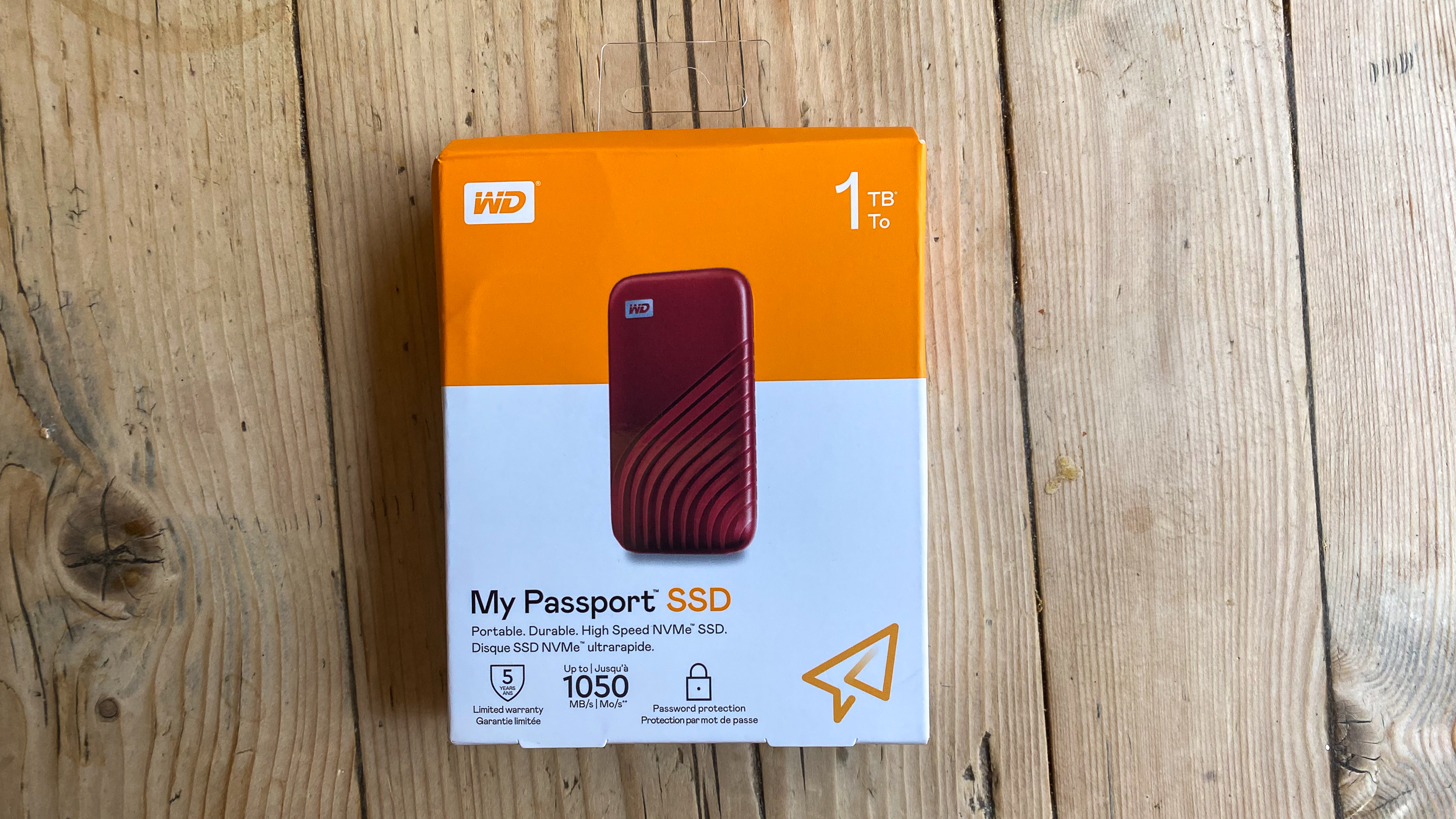
Just look at the logo. Is this a cryptocurrency or an organics store? For real: One ‘farms’ rather than ‘mines’ it. This is not just a cute term. ‘Farming’ better describes the process of minting new coin. One dedicates a big area of one’s hard drive to chia code, and then lets it grow into new chia; hence eschewing both the energy-wasteful approach of bitcoin (BTC), and the pleb-unfriendly approach of ether (ETH). It’s worth it to do, I’d say. Just buy a secondhand SSD drive (like this), and run the Chia software.7 Here is the guide. Chia (XCH) is a particularly apt form of money, I’d say, for eco-warriors.
Granted, the inflation rate seems scary. This is normal for a young cryptocurrency. It’s coming down quickly; that’s the main thing.
Power Grid Analogy
Think of starting to use chia or ether or vertcoin like setting up your own e-mail server.
There’s a better analogy, but it goes deep into the nature of money nowadays. Bear with me.
You must have noticed a thing like this in your neighborhood sometime:
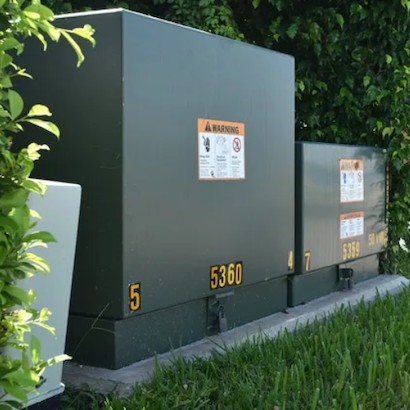
That’s a step-down transformer box. It transforms the ~220,000 volts on your power lines to the 230 or 120 volts for your house. Why the need? It’s simple. Low voltage does not travel far. Power lines must run for hundreds of kilometers. Low voltage suits your home, but not long distance transmission.
Transmission is a different use-case to storage or local usage. It’s the same for money, now that money can be sent at the speed of electricity. Think of the crypto app on your smartphone as a transformer box. You can be sent money by your comrades in one form, e.g. chia, and then transform it to another, e.g. dollars, to buy eggs at your local superette.8 Gone are the days when this would be slow and costly.
This flexibility is your freedom. The ‘high voltage’ money, apt for sending long distances, has certain criteria; reliability, for example. Once the criteria is met, then you may choose based on ideology.
So-- why are you dithering? You have some nagging worries for sure. Some answers coming up in Part Three.
- i.e. Application-Specific Integrated Chips (Return)
- Commonly called by it’s ticker, ETH, pronounced ‘eeth’. Also, incorrectly called ‘Ethereum’, but that is the whole blockchain and programming ecosystem. It’s like saying “I’m buying Apple” when you mean “I’m buying an Apple Mac.” (Return)
- See footnote 2 above. (Return)
- In August, 2014. See this article. (Return)
- Graphics Processing Unit. Advanced video, e.g. for games, needs its own chipset. (Return)
- Offer may not be valid when you’re reading this. (Return)
- Strictly speaking, there is a ‘smart part’ and a ‘dumb part’ of the database, and you only need the SSD for the smart part. You may put the dumb part on any old hard drive. (Return)
- convenience store. (Return)