Coin Control and Websites
How did Satoshi stay a mystery while transacting on the very public bitcoin blockchain? He took his own advice. He practiced coin control. Nowadays, it’s a long lost art. It’s like a hospital full of patients yelling for new antibiotics and not washing their hands after taking a dump.
Last time, I gave the three rules of coin control. This time, I’ll deal with a problem that arises thereof. You’re not supposed to reuse addresses, but, then, how do you put an address on a website? Edit it every few days?
Overview
We are, in truth, spoilt for choice. There is no excuse for plonking a single bitcoin address on your website. Which way you choose hangs on the amount of upkeep you are happy doing, and whether you need to care for your interlocutor’s privacy.
I will deal with four ways to get bitcoin at a new address every time from people visiting your website.1
- Paynyms
- Silent Payments
- BTCPay Server
- Bitcoin in the mail
The topic can turn into a big geek-out. I will make it more earthy by using two examples throughout: Andrew, a blogger; and Seina, a dissident journalist.

1. Paynyms
Overview
A Paynym looks like this:
+victoriouspermission97
(If that looks familiar, it's mine.)
That username takes the place of all your recieving bitcoin addresses. It’s simple. It hides a lot of complexity. It lets the person sending you bitcoin make a secret set of addresses. Only he or she and you know that these addresses are yours.
There are about one million bitcoin transactions per week. Let’s say a handful of those are from your donors. With Paynyms, it’s not even a needle in the haystack. This is a strand of hay in a haystack.
Hassle?
Yes and no.
Overall: no, using Paynyms is a breeze. Setting up a Paynym is a hassle nevertheless. You need to use specialized software. You need a Dojo server and a Paynym-compatible client, e.g. Ashigaru. If you can’t run your own Dojo server, don’t worry; there are free, legit, public ones at dojobay.pw.
“Hey Andrew! Here’s my advice on Paynyms...”
Hey Seina! Here's my advice on Paynyms..."
Paynym Takeaway:
- Moderate hassle to set up.
- Easy after set up.
- Great for wide-ranging, anonymous donations.
- Moderate risk to senders.2
2. Silent Payments
Overview
Silent Payments are like monero (XMR) for bitcoin (BTC). It works much the same.
Everything begins with a long string of alphanumeric text. You have a unique one. You put it on your website. Something like this:
sp1qqweplq6ylpfrzuq6hfznzmv28djsraupudz0s0dclyt8erh70pgwxqkz2ydatksrdzf770umsntsmcjp4kcz7jqu03jeszh0gdmpjzmrf5u4zh0c
This works magic. Like Gandalf, it’s never far away, in the background, ready to help. I mean that this address is all that’s needed to calculate all the secret addresses.
Silent Payments do need specialized software, but not much. “No server required” as they say.3 All one needs is a client app which handles Silent Payments. In my opinion, Cake Wallet is the best.
Hassle?
Setting it up is easier than Paynyms. One just turns on Silent Payments in the app. After that, unlike for Paynyms, Silent Payments becomes a bigger hassle. The Silent Payments protocol means that any transaction might be to you; there’s no foreknowing. The blockchain must be scanned for clues in every transaction. It slows down the app. This is true for both payor and payee.
Hey Andrew! Here is my advice on Silent Payments...

Hey Seina! Here is my advice on Silent Payments...
Silent Payments Takeaway:
- Easy set up.
- Slows down the app a bit.
- Might be hassle for some donors.
- It’s worth it for situations whereby the payors need guaranteed privacy.
BTCPay Server
Overview
BTCPay Server is a program which works a lot like Stripe or Square; it processes payments. It hands out new addresses automatically.
Of all the solutions I mention, BTCPay Server is the most popular.
One runs it on a home server, or a VPS.4 One may even pay for it as a service, but then one doesn’t control one’s bitcoin. I don’t like to recommend a solution without self-custody, unless the alternative is a descent into inflationary fiat hell.
Hassle?
Quite a lot. The easiest way is a Start 9 home server. That still ropes in a fair amount of time and effort. You could pay someone to help, or try the public forum.
The bigger problem is the ongoing upkeep. Shit happens; you’ll need to be open to the likelihood of hours spent fixing a problem or hundreds of dollars in I.T. support.
Hey Andrew! Here's my advice about BTCPay Servers

Hey Seina! Here's my advice about BTCPay Servers
BTCPay Server Takeaway:
- A payment processor.
- You need the will to spend time (and/or money) on upkeep.
- Does not help with sender-privacy.
- Makes sense if you expect a lot of payments or need invoicing.
Bitcoin in the mail
Overview
People forget about this one. You can safely send bitcoin in the mail!
Normally, the way crypto works is that you hand over your bitcoin address to the payor. Crypto in the mail works differently. You don’t give the payor your address. The payor at first pays him- or herself in the comfort of his or her own home. He or she does so with a new crypto address; a QR code printed on paper. Then, this QR code, preloaded with bitcoin (BTC) is sent in the mail.
I said ‘safely’. How safe is snail mail? Turns out, very. You can password-protect the paper wallet. This password-protection is called ‘BIP38 Encryption’. Look for a tick box saying that.5
Bitcoin paper wallets look nice by the way.
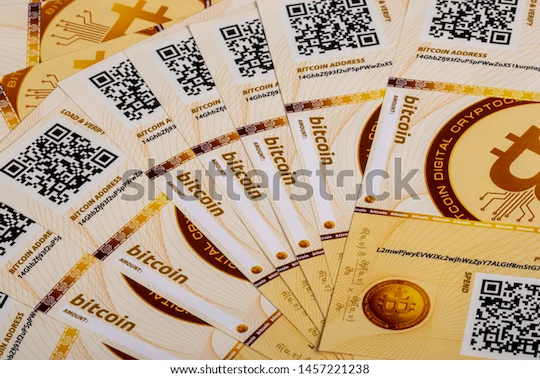
I do a simplified version at my website here, but it’s for litecoin (LTC).
Hassle?
Getting a P.O. Box.
Hey Andrew! Here's my advice on bitcoin in the mail..."

Hey Seina! Here's my advice on bitcoin in the mail...
Bitcoin in the Mail Takeaway:
- Works very well.
- Sender and recipient privacy.
- Bypasses the whole problem of address reuse by getting the sender to make the address and ‘preload’ it with bitcoin.
- Never use your home address or a P.O. box linked to your home address.
Other Options
Javascript/ Python
You can code your way out of this problem. A.I. will help. Your webpage can insert new bitcoin addresses every week.
Bitcoin over Lightning (BTC-LN)
In my opinion, everyone taking in donations should offer BTC-LN. I didn’t make it one of the options herein, because bitcoin over Lightning is in a different field; it’s not to do with addresses and coin control. It does protect sender-privacy.
Final Thoughts
I would offer BTC-LN, and then two of the options mentioned. Give people the choice.
Next time, I’ll add another option; a neat, D.I.Y. trick: OpenAlias with automated addresses.
- This would also work for a social media profile. Some of the ways just work; others would need a hyperlink to a webpage. If you don’t have your own website, you could use a free, public one, like neocities.org or carrd.co. (Return)
- Maybe by the time you read this all Paynym apps will block sloppy reuse of a well-used bitcoin address for the sender’s initial transaction. I believe that this risk will be almost zero in the future. (Return)
- Source (Return)
- Virtual Private Server. A server in a data centre somewhere which you manage yourself. To save money, it is just one piece of software sharing the same hardware with others. In other words, for one rack-mounted server, there might be 10 virtual servers hired by different people. (Return)
- Given enough time, e.g. weeks, the password can be brute-force guessed. Use a strong password of at least 12 characters with multiple numbers and at least one symbol, e.g. swap out each letter ‘a’ for ‘@’. (Return)